
Contents
Overview
Billy Cox is a legendary American bassist whose career is inextricably linked to the transformative era of psychedelic rock and the evolution of R&B. Best known as the rhythmic anchor for Jimi Hendrix, Cox provided the steady, soulful foundation that allowed Hendrix to explore the outer limits of the electric guitar. His contribution to the Band of Gypsys marked a pivotal shift in rock history, blending funk sensibilities with heavy rock in a way that prefigured the birth of funk-rock and heavy metal. Beyond his work with Hendrix, Cox's session pedigree includes collaborations with icons like Sam Cooke and Little Richard, cementing his status as a master of the groove. Today, he remains the sole surviving member of Hendrix's primary experimental lineups, serving as a living bridge to the 1960s counterculture movement.
🎵 Origins & History
Born in Wheeling, West Virginia, Billy Cox's musical journey began in a household filled with the sounds of classical music and jazz. While serving in the U.S. Army, he heard a young Jimi Hendrix playing guitar in a service club. The two formed The King Kasuals, a group that honed its skills on the Chitlin' Circuit, performing in venues across Nashville and the Southeast. During this formative period, Cox developed a deep, pocket-oriented style that complemented Hendrix's flamboyant lead playing. While Hendrix eventually left for London to form the Jimi Hendrix Experience, Cox remained a trusted confidant and musical touchstone. Their reunion would lead to some of the most influential performances in the history of rock music.
⚙️ How It Works
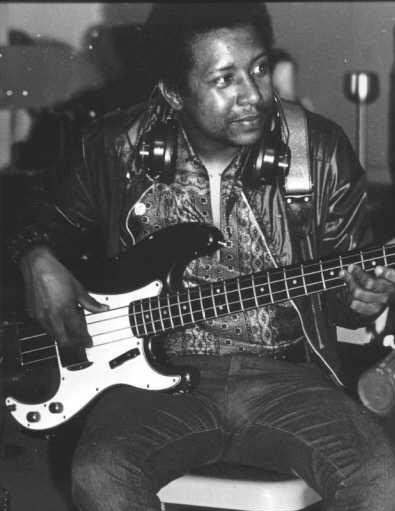
Cox’s approach to the bass is defined by a 'less is more' philosophy that prioritizes the 'pocket' over technical flash. Utilizing the Fender Precision Bass, he created a thick, percussive tone that served as a tether for Hendrix’s improvisational flights. In the Band of Gypsys trio, Cox worked in tandem with drummer Buddy Miles to create a repetitive, hypnotic groove that allowed for extended jamming. This mechanical synergy was essential for the transition from the pop-oriented structures of early Experience tracks to the long-form, blues-infused explorations of the late 1960s. His ability to maintain a steady tempo while reacting to Hendrix's unpredictable feedback and wah-wah modulations remains a masterclass in ensemble playing. This rhythmic stability was the engine behind the iconic New Year's Eve performances at the Fillmore East.
📊 Key Facts & Numbers
Cox has been a mainstay of the Experience Hendrix Tour. His work on the posthumous release The Cry of Love reached number 3 on the Billboard 200 in 1971. He continues to manage a discography that spans 60 years of recorded music history. In 2011, he was inducted into the Musicians Hall of Fame and Museum in Nashville.
👥 Key People & Organizations
The most significant relationship in Cox's life was his brotherhood with Jimi Hendrix, whom he described as his 'soul brother.' He also maintained a close professional bond with Buddy Miles, the powerhouse drummer whose soulful vocals and heavy hitting defined the Band of Gypsys sound. In the 1970s, Cox collaborated with Charlie Daniels and performed session work for Stax Records artists like Rufus Thomas. He is currently a key figure in the Experience Hendrix L.L.C., the family-run company that manages the guitarist's estate. His interactions with producer Eddie Kramer have been vital in ensuring the sonic integrity of archival Hendrix releases. These connections have allowed Cox to remain at the center of the Hendrix legacy for over half a century.
🌍 Cultural Impact & Influence
Cox’s influence extends far beyond his bass lines; he was a pioneer of the Black Rock movement that challenged the racial segregation of music genres in the late 60s. By bringing a heavy R&B sensibility to the psychedelic stage, he helped bridge the gap between the Motown sound and the emerging hard rock scene. Modern bassists like Flea of the Red Hot Chili Peppers and Bootsy Collins have cited the Band of Gypsys as a foundational influence on the development of funk. His performance at Woodstock remains one of the most culturally significant moments in music history, symbolizing the peak of the hippie era. Cox's presence in the Hendrix circle provided a grounded, professional stability that was often missing in the chaotic music industry of the time. He remains a symbol of the enduring power of the rhythm section in shaping cultural movements.
⚡ Current State & Latest Developments
In 2024 and 2025, Billy Cox continues to be an active guardian of the Hendrix flame, frequently appearing at commemorative events and guitar clinics. He remains a featured performer on the Experience Hendrix Tour, sharing the stage with contemporary greats like Joe Satriani and Kenny Wayne Shepherd. Recent archival releases from Sony Music and Legacy Recordings have featured previously unheard recordings of Cox and Hendrix from the 1969-1970 period. He is also active on social media platforms like Facebook, where he shares personal anecdotes and rare photographs with a global fanbase. Despite being in his 80s, his playing remains sharp, and he is often sought out for interviews regarding the technical aspects of 1960s recording. His memoir, currently a subject of much anticipation among fans, aims to provide the definitive account of his years with Hendrix.
🤔 Controversies & Debates
One of the primary debates surrounding Cox's career involves the transition from Noel Redding to Cox in the Hendrix lineup. Purists of the original Experience often argue that Redding's melodic, treble-heavy style was superior, while others contend that Cox's deep groove was necessary for Hendrix's artistic growth. There has also been historical tension regarding the management of the Hendrix estate and the legal battles between Janie Hendrix and other family members. Cox has generally stayed above the fray, though his testimony and recollections are often used to settle disputes about Hendrix's final intentions. Some critics have also questioned the commercialization of the Hendrix legacy through endless 'tribute' tours, though Cox's participation is usually seen as providing much-needed authenticity. The ethics of posthumous releases, such as Both Sides of the Sky, continue to be a point of contention among musicologists.
🔮 Future Outlook & Predictions
As the last living link to the Hendrix trios, Cox's role as a historical consultant will only increase in importance as the 60th anniversary of Hendrix's passing approaches in 2030. Future documentaries and biopics, such as those rumored to be in development by Legendary Entertainment, will likely rely heavily on his first-hand accounts. Technological advancements in AI audio restoration may allow for more of Cox's unreleased basement tapes with Hendrix to be polished for commercial release. There is also a growing movement to have Cox formally recognized with a Grammy Lifetime Achievement Award for his contributions to the recording arts. His legacy is expected to be a cornerstone of the Rock and Roll Hall of Fame's future exhibits on the evolution of the rhythm section. He will likely remain the definitive voice on the 'Hendrix sound' for the foreseeable future.
💡 Practical Applications
For aspiring musicians, Billy Cox's career offers a blueprint for how to be an effective 'sideman' while maintaining a distinct musical identity. His use of the Fender Bassman amplifier and specific string gauges provides a technical template for achieving a vintage 1960s rock tone. Educators often use his bass lines from tracks like 'Machine Gun' to teach students about the importance of space and dynamics in improvisational music. His career also demonstrates the importance of networking and loyalty, as his friendship with Hendrix from the Army days eventually led to his greatest professional successes. In the world of music production, his recordings are frequently sampled by hip-hop producers looking for authentic, soulful drum and bass breaks. His life serves
Key Facts
- Category
- culture
- Type
- topic